Reflecting on the roots of the ecological crisis inevitably leads to questions about the economic model that organises our societies, the power relations that sustain it, and the alternatives that are beginning to take shape.
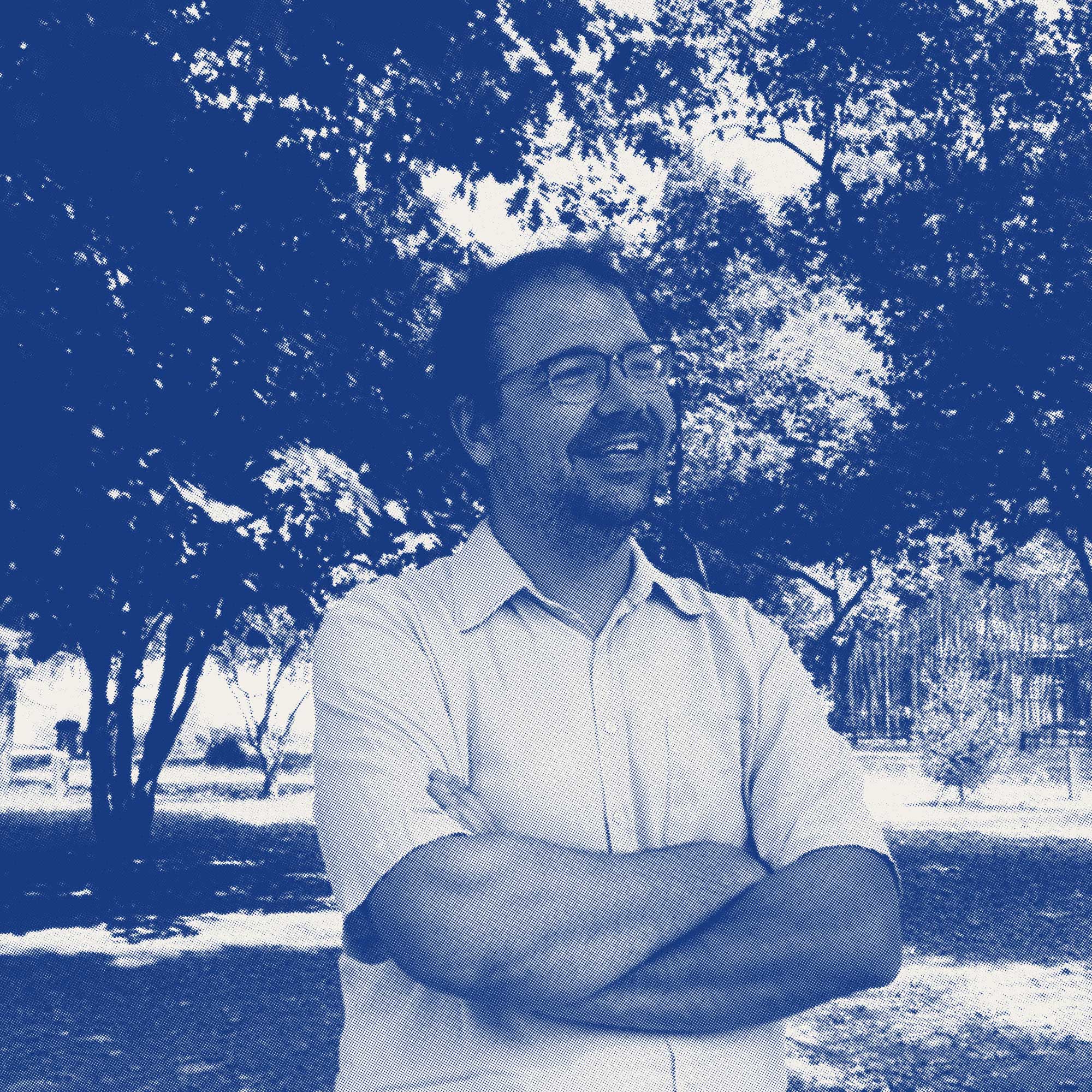
It was at the intersection of ecology, capitalism and social justice that we spoke with Jonas Van Vossole, a researcher at the Centre for Social Studies of the University of Coimbra, who challenges some of the most widely held assumptions about the ecological crisis.
Why do you argue that we are not living in the Anthropocene, but in the Capitalocene? What changes when we identify capitalism — rather than “humanity” — as responsible for the ecological crisis?
J: Over the past 10 to 15 years, the term Anthropocene has come to designate a new geological epoch, marked by the global impact of human activity on the environment, as reflected in CO₂ concentrations, microplastics and pollution. However, this approach is depoliticising, because it holds humanity as a whole responsible, overlooking two central issues.
First, there is a historical problem: humanity has existed for at least 200,000 years, yet the geological effects we observe have only emerged over the past 200 to 500 years. It is therefore unfair to attribute responsibility to 99% of human history.
Second, there is a global social justice issue: we cannot equate the responsibility of an Indigenous chief in the Amazon with that of an ExxonMobil CEO, who has known about the climate impacts of oil consumption since the 1970s. Most of the world’s population has neither the awareness, the means nor the responsibility for these impacts.
In your project Nature and Labour, you argue that strong trade unions are part of the ecological solution. How do you see the relationship between trade unions and the climate crisis?
J: The costs of climate action are usually presented as a trade-off between protecting jobs and ensuring sustainability, as though the two were opposing goals. My research demonstrates that this opposition is false.
First, labour and ecology are not opposites: labour is, by definition, the human interaction with nature. Friedrich Engels already showed how human evolution — as homo faber — resulted from our interaction with the environment, from hunting, which enabled the development of a larger brain, to the use of tools, which shaped our thumbs. If there is a conflict between labour and the environment, it stems solely from the way labour is socially divided and organised. This contradiction can be resolved through fairer labour relations. And trade unions have a central role to play in this.
The absence of this natural alignment is due to the left-wing politics of the twentieth century. Politically, the forces aligned with the working class during the twentieth century — such as communism and social democracy — largely ignored ecology. Communism became associated with environmental disasters (e.g. the Aral Sea and Chernobyl), while social democracy prioritised the national welfare state, externalising the ecological crisis to the neo-colonial world.
As a result, ecological discourse was taken up by urban middle classes, who disconnected it from the working class. Over the past 30–40 years, ecology has become associated with consumption restrictions and taxes, which disproportionately affect the most disadvantaged, reinforcing the idea that it is a privileged concern, rather than a class issue.
My research seeks to demonstrate that this separation between ecology and social class is wrong.
When you describe the separation between “society” and “nature” as an invention of capitalism, what is really at stake?
J: I argue that the concept of nature is an invention of capitalism, as is the opposition between nature and society. In the Middle Ages, “natural law” (ius naturale) referred to customs and divine will as applied to society. With the Enlightenment and modernity (the fifteenth and sixteenth centuries), Western political philosophy came to be based on the separation between nature and civilisation, as seen in Rousseau, Locke and Hobbes, who described the state of nature as a state of ignorance, without laws, associated with the “uncivilised”.
This separation justified colonisation and the primitive accumulation of capitalism: the “state of nature” legitimised the exploitation of territories and peoples, as in the case of the New World, where land was considered uncultivated and its inhabitants, deemed “natural”, could be enslaved. Hugo Grotius, a precursor of international law, argued that territory belonging to “no one” (terra nullius) could be colonised. For Locke, it was a moral duty to appropriate land in a “natural state” if it was not being subjected to productive labour.
From the perspective of political economy, nature is central to capitalism because it enters the economy as a free resource. In Marxist terms, the use value of an object (such as a chair) results from the combination of human labour and natural resources (such as wood). In these cases, nature is not paid for: it is treated as a free good, like water or unappropriated land.
This logic extends to other forms of naturalised and unpaid labour, such as women’s reproductive labour (caring for families, raising children and looking after the elderly) or slave labour. During modernity, there was considerable debate over who counted as human: while Indigenous peoples were recognised as human beings (with souls), enslaved Africans were treated as natural resources, without souls, in order to justify their exploitation. This gave rise to racism, which associates racialised people with a raw state of nature, devoid of culture or rationality.
Even the female body is seen as nature, in opposition to the norm of the rational investor, supposedly without physical needs and focused solely on accumulation and production.
In your writings, you seek to bring class, ecology, gender and race together in a single analysis of capitalism. Why is it important to think about these struggles collectively, rather than treating them as separate issues?
J: There are two reasons for treating the different forms of capitalist exploitation as a whole. First, because capitalism uses the category of nature to differentiate and exploit sections of the world’s population, even though the underlying logic of exploitation is the same: a political-economic system that produces these distinctions.
Politically, it is important to rearticulate these struggles. Over the past 50–60 years, particularly since May 1968, social struggles — previously united under ideals such as socialism or anarchism — have shifted towards a focus on identities rather than structural inequalities. Movements such as anti-racism, feminism and ecology have become detached from class issues, resulting in competing agendas that are sometimes used against one another.
From the 1970s onwards, the concept of intersectionality emerged in the United States, driven by Black women such as Angela Davis, who argued for the need to bring different struggles together without overlooking their internal contradictions (sexism within the Black movement, racism within feminism, and so on). From a materialist perspective, what unites these struggles is capitalism, the economic system that produces these divisions.
Is it possible to tackle the ecological crisis without simultaneously confronting the inequalities produced by colonialism and global capitalism?
J: The ecological crisis, just like the question of gender, is a colonial issue. Simone de Beauvoir already argued that being a woman is not a natural condition, but a social construct, shaped by the roles society assigns in order to reproduce its own structure. Capitalism, as a system driven by profit (rather than value or growth in themselves), perpetuates this logic in two main ways.
The first is accumulation by dispossession, based on colonisation and the appropriation of free resources (such as land, data or DNA), a process that continues to this day. The second is expanded accumulation, based on free contracts and market forces, whereby most of the population is compelled to sell its labour in order to survive, thereby generating profit for capital.
These two logics — dispossession and exploitation through contractual relations — are complementary and, at times, contradictory. For example, when the European working class won social rights in the late nineteenth and early twentieth centuries, states shifted exploitation abroad through colonialism and wars (such as the First World War) in order to offset the domestic crisis of profitability.
The same imperial logic applies to ecology: the idea that social rights (such as higher wages) require greater pollution or the dispossession of resources is false. Labour depends not only on social conditions, but also on environmental conditions. John Bellamy Foster, for example, argues that the living conditions of the working class in nineteenth-century England — including poor housing, industrial pollution and a lack of hygiene — were not merely social problems, but also ecological ones. The class struggle must therefore encompass both social and environmental conditions, since they are inseparable.
In Portugal, we are seeing large solar parks, lithium mining concessions and forestry monocultures advancing across rural territories. Who benefits and who loses under this model?
J: Over the past decade, green capitalism has emerged as a new form of internal colonialism, focused on rural areas in order to create a new economic sector. Green capitalism arises from the contradiction between capitalism and ecological concerns, such as climate change, which are deeply connected to the oil industry (energy, fertilisers and plastics). Dependence on this sector has generated externalities such as pollution and greenhouse gas emissions.
Global capital has sought to restructure the economy in order to turn this crisis into new markets and sources of profit, such as carbon markets. However, these do not resolve the relationship between humanity and the environment. On the contrary, they have led to the privatisation of common resources, as in the Amazon, where the imposition of financial markets has resulted in the seizure of Indigenous lands, their enclosure as private property, and the displacement of local populations.
Another face of green capitalism is the green energy and mobility industry, which promotes renewable energy as an alternative to oil. However, solutions such as biofuels (produced from oils and sugars) require vast areas of land in Latin America and Africa that could otherwise be used for food production or nature conservation. In Portugal, photovoltaic parks (in the Alentejo and Cova da Beira) and dams are transforming natural and inhabited landscapes into “deserts of iron, plastic and concrete”, destroying ecosystems and local communities under the misleading banner of sustainability.
Green mining, such as lithium extraction in northern Portugal, is another manifestation of this colonialism. Under the rhetoric of the energy transition and sovereignty, this activity reproduces the extractivist and colonial logic of mining: the destruction of mountains and rivers, violence against affected communities, and operations outside the law. Historically, mining took place in colonies or was carried out by marginalised groups (immigrants and minorities). Now, with the EU’s Critical Raw Materials Act, this logic is turning towards Europe’s periphery (such as Portugal), where governments circumvent environmental and social laws in the name of “strategic assets”, prioritising multinationals over local communities.
What kinds of economic, political or community-based alternatives could ensure a just energy transition that does not destroy local ways of life?
J: The alternative to capitalism is simple, but problematic. Capitalism is based on profit and is anti-democratic, because decision-making power depends on who owns capital, which is distributed in an extremely unequal way. Today, companies such as those of Elon Musk or Amazon concentrate trillions of dollars in the hands of a small number of individuals, creating enormous disparities that generate externalities and leave many interests unrepresented.
While a minority with capital controls the strategic choices of the global economy — what to produce, what to consume and where to invest — the majority of the world’s population has no economic influence. This is an economic dictatorship, which produces today’s socio-ecological consequences.
The alternative is to democratise decision-making power: if everyone, from an Indigenous person in the Amazon to an ExxonMobil CEO, had an equal say in global production, priorities would change. We would need to rethink the use of energy resources and how living conditions are organised at a global level.
Only in this way could we overcome the false separation between the economy and ecology, bringing issues such as wages, pensions, access to education and environmental protection (clean air and resources for future generations) into the same debate.
Another point worth making is that the belief that capitalism represents the “end of history” and that there are no alternatives, although widely accepted, is historically false.
First, capitalism is not eternal: it is only 500 years old, whereas 99.99% of human history unfolded under other socio-economic systems, without the destructive relationship with the environment imposed by capitalism. Furthermore, the notion that the ecological crisis means the “end of the world” is not useful when searching for alternatives. In reality, capitalism has already produced several “ends of the world” throughout its history. For the Incas and Aztecs, for example, the arrival of capitalism in the sixteenth century represented a socio-ecological catastrophe, with genocides caused by disease and exploitation.
The current ecological crisis will not mean the end of humanity, but it will bring new socio-ecological conflicts: wars, migration and struggles over resources. These conflicts may, however, give rise to new actors and forces capable of proposing alternatives to capitalism’s destructive relationship with nature.
It is important to historicise the idea that there are no alternatives. Jason Moore puts forward the interesting argument that capitalism itself emerged from a socio-ecological crisis: the Little Ice Age, towards the end of the Middle Ages. Climate cooling destroyed agriculture, caused famine and disease, and led to wars that weakened feudalism. The urban bourgeoisie emerged as a new social class, replacing the feudal system based on serfdom and religious legitimacy. In this sense, a profound crisis of capitalism could also give rise to new forces capable of transforming humanity’s relationship with the environment.
Do you believe there is political space today for a popular, democratic and working-class ecology? Or does ecology remain captured by urban elites?
J: The term political ecology emerged as a critique of dominant ecological discourse, which is often moralistic and depoliticised, and captured by urban elites. Political ecology politicises the issue, revealing the inequalities and power relations underlying the relationship between humanity and the environment.
In recent years, ecological concern has mobilised young people in particular, leading to greater political awareness. The climate movement, for example, initially focused on moral pressure (such as calling for the implementation of policies based on the IPCC’s recommendations), but evolved into a structural and systemic critique. Activists such as Greta Thunberg and young people involved in climate marches in Belgium went from being invited guests at events such as the G8 or the UN to becoming critical voices who lost their prominence precisely because they challenged the system.
Ecology cannot be separated from other social struggles. The question of Palestine, for example, has shown how these struggles intersect. However, it is likely that ecological change will emerge from broader social movements, which may not necessarily focus primarily on ecology but can nonetheless transform humanity’s relationship with the environment.
The ecological discourse of urban and academic elites often disconnects itself from the struggles of disadvantaged people — the working class, farmers, people living in favelas and Indigenous communities. Yet, for these groups, ecology has always been linked to the struggle for sovereignty and survival. As Chico Mendes said in the 1970s: “Ecology without class struggle is just gardening.” In Europe, we are reaching conclusions similar to those that have long existed in the Global South, which is a positive development.
What message would you give to communities resisting mining, large-scale energy projects and the expansion of so-called green capitalism?
J: My main message to communities resisting green capitalism and green colonialism is one of solidarity. These communities are at the forefront of resistance to a new form of colonialism which, becoming increasingly extractivist, affects us all. Green capitalism is bringing the colonial logic back to Europe, particularly to rural areas such as Barroso. However, this logic of violent dispossession is not limited to the green industry: capitalism is abandoning its own liberal principles (such as the rule of law and private property) in favour of direct dispossession, enslavement and the dismantling of democratic forms of coexistence.
This trend, exacerbated by the rise of authoritarianism and the far right, is most visible in sacrifice zones, but it represents a widespread risk. It is therefore essential to support these struggles, even for those who are not directly affected. Sacrificed communities need resources that have often been taken from them in the first place: legal and financial support, as well as public visibility, to challenge mining projects, compile legal dossiers and gain access to environmental impact assessments.
Building connections between struggles and showing solidarity are essential if these frontline communities are to succeed in their resistance.
What message would you give to young people who are deeply concerned about the climate crisis and are looking for ways to take action, but feel that political and economic responses remain far below the scale of the problem?
J: My message to young people experiencing climate anxiety is that anxiety is the worst possible response. It stems from a lack of alternative perspectives: we feel anxious because we cannot see a way out. But this absence of a horizon also prevents us from taking action. Without hope, we lose our ability to mobilise and the energy needed to transform reality.
It is equally important to put into perspective the idea that we are witnessing the end of the world. As young people in Europe, we are unlikely to be the first or the most directly affected by climate change. We have resources and an ability to adapt that many other populations do not.
True climate anxiety is experienced by those who face its material impacts every day: those living in ageing villages surrounded by eucalyptus plantations, who spend their summers fearing wildfires; those living in favelas, who fear that their homes will be destroyed whenever torrential rain strikes. In these cases, anxiety stems directly from living conditions.
The anxiety experienced by many young people in Europe, on the other hand, is largely the result of an ideological construct of which we are also victims. Rather than allowing it to paralyse us, we should recognise that we have the resources and, above all, the responsibility to help bring about change on a global scale.
Biography
Jonas Van Vossole is co-coordinator of the EcoSoc – Ecology and Society research group at the Centre for Social Studies of the University of Coimbra (CES), where he works on political ecology, political economy and democratic theory. He is also part of the EJMapping project team, which analyses environmental conflicts in Portugal from an environmental justice perspective.
He holds a PhD in Political Science and researches the relationships between capitalism, democracy, crisis and ecological justice, with a particular focus on responses to social and climate challenges. He is the author of Capitalism, Crisis and Democracy (Brill, 2026), and has published articles in international journals including Capitalism Nature Socialism, Journal of World-Systems Research, Review (Fernand Braudel Center), Critique and Revista Crítica de Ciências Sociais.
His academic career is intertwined with more than two decades of activism in anti-racist and anti-globalisation movements, as well as movements for climate justice and social rights — an experience that has profoundly shaped his research and critical thinking.